
 Sex Toys For Men
  Sex Toys for Women
  Sex Toys for Couples
  Anal toys
  Fit it
 Sex Ed
 Deals
Deals About Us
 Contact Us
 May/13/2023
 4245
4245 8 min read
 BDSM for Beginners: Consent, Safety and First-Scene Basics

Our articles may contain affiliate links - if you enjoy our content, support us by shopping through them! We earn a small commission at no extra cost to you. Learn more here.
Our articles may contain affiliate links - if you enjoy our content, support us by shopping through them! We earn a small commission at no extra cost to you. Learn more here.
BDSM can look intimidating from the outside, but beginner play does not need to start with complicated rope, severe pain or a room full of equipment. At its core, BDSM is a broad umbrella for consensual activities involving bondage and discipline, dominance and submission, sadism and masochism, sensation, roleplay and negotiated power exchange. The safest place to start is with communication, simple tools and enough room for either person to change their mind.
What Does BDSM Mean?
BDSM combines several overlapping ideas: bondage and discipline, dominance and submission, and sadism and masochism. Not every person who enjoys BDSM likes every category. Someone may love a blindfold but have no interest in impact play. Another person may enjoy taking a dominant role without using restraints at all.
That flexibility matters for beginners. You do not have to prove anything by choosing the most intense activity. A good first scene is usually simple enough that both people can pay attention to communication and physical responses.
Consent Comes Before Every BDSM Scene
Consent in BDSM should be informed, specific, voluntary and reversible. Agreeing to one activity does not mean agreeing to everything, and a person can stop even after a scene has started. The National Coalition for Sexual Freedom maintains a Consent Counts program specifically focused on consent in BDSM communities.
Negotiate the Scene First
Before play, discuss what you want to try, what is off limits, relevant injuries or medical concerns, what clothing can be removed, what tools may be used and how you will stop. If alcohol or drugs make either person unable to make clear decisions, postpone the scene.
Use a Safeword or Safesignal
A traffic-light system is easy for beginners: green can mean continue, yellow can mean slow down or check in, and red can mean stop. If speech may be difficult because of a gag, noise or position, agree on a nonverbal signal such as dropping an object or making a repeated hand movement.
Do Not Treat Silence as Consent
People can freeze, become overwhelmed or have difficulty speaking. Check in actively, especially during a first scene. A dominant role does not create permission to ignore boundaries.
Dominant, Submissive and Switch Roles
A dominant directs agreed parts of the scene. A submissive gives up selected control within agreed boundaries. A switch may enjoy either role depending on the partner or scene. These are roles, not measures of personality, confidence or relationship status.
Power exchange also does not remove responsibility from the person receiving control. Both people remain responsible for consent and safety. If you want a lighter introduction to character-based play, our beginner roleplay guide covers negotiation without requiring physical restraint.
Beginner Bondage: Keep It Simple
Bondage changes a person’s ability to move, which means small problems can become harder to solve. For a first experience, purpose-made cuffs with quick-release features are generally easier to manage than complex rope ties.

Protect Circulation and Nerves
Restraints should not cause numbness, tingling, unusual coldness, severe pressure or concerning color changes. Check hands and feet regularly and release the restraint immediately if circulation or sensation seems affected. Avoid thin cords that concentrate force into a narrow area.
Keep Restraints Away From the Neck
Neck compression and erotic asphyxiation can be fatal. A medical literature review of BDSM-related fatalities found strangulation was the most common cause among the cases reviewed. Beginners should not treat breath restriction as a normal next step in bondage.
Keep a Fast Release Available
If you use rope, learn the specific tie before putting it on a person and keep appropriate safety shears nearby. Never leave a restrained person unattended. Suspension bondage requires specialized training and should not be treated as a beginner technique.
Impact Play for Beginners
Impact play includes spanking, paddles and floggers. Start with lighter intensity and larger, softer tools that spread force more broadly. The buttocks and fleshy parts of the upper thighs are common beginner areas because they have more padding than bony regions.
Avoid High-Risk Areas
Avoid the head, neck, spine, kidneys, abdomen, joints and other vulnerable areas. Do not assume a harder strike is more exciting. Increase intensity only when the receiving partner actively wants more.
Warm Up Gradually
Begin with hands or light strokes, then build slowly. A warm-up lets both people learn how the receiving partner responds that day. Pain tolerance changes with stress, fatigue, medication and mood.
Sensation Play Without Unnecessary Risk
Sensation play can be a gentle introduction to BDSM because it can use texture, anticipation and contrast rather than strong impact.
Blindfolds
A blindfold can make touch feel more intense because the receiving partner cannot predict where it will happen. Keep verbal communication available and remove the blindfold if the person feels dizzy, panicked or disoriented.
Temperature Play
Use products designed for body-safe temperature play and test temperature on a less sensitive area first. Ordinary household candle wax can burn and should not be treated as interchangeable with purpose-made low-temperature massage candles. For a fuller safety guide, see our temperature play guide.
Pinwheels and Clamps
Tools that pinch or create sharp sensation should begin gently. Remove clamps for numbness, concerning color change or pain that feels wrong rather than pleasurable. Never place sharp sensation tools near the eyes or other areas where a small mistake could cause serious injury.
What About Electrostimulation?
Electrical play is not a good category for improvisation. Use only devices specifically designed for erotic electrostimulation and follow the manufacturer instructions. Do not substitute household electrical equipment or homemade wiring. Avoid use across the head, neck or chest and do not use electrical stimulation if the device instructions list a medical contraindication that applies to you.
Choose Toys That Match the Scene
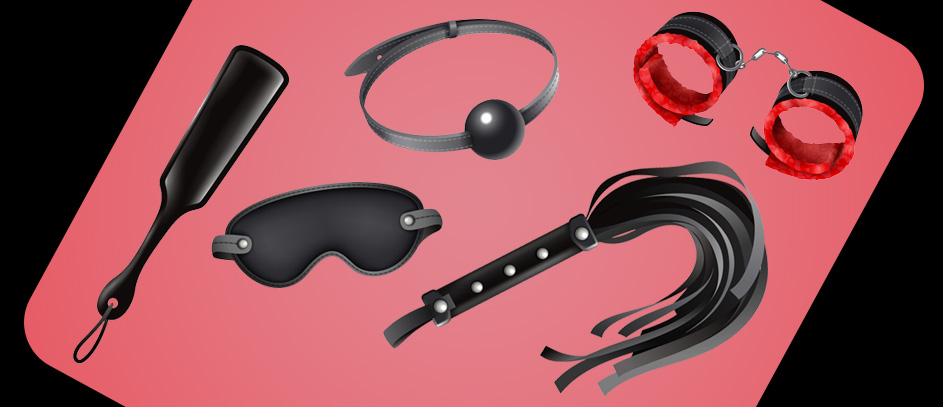
A beginner BDSM kit does not need to be large. A comfortable blindfold, quick-release cuffs and one impact toy can be enough. If you want vibration without adding restraint complexity, a small bullet vibrator can provide controlled external stimulation. If you add an anal toy, use only a product intended for anal use with a secure external base or handle, such as products in our butt plug guide.
Aftercare and the Post-Scene Check-In
Aftercare means helping everyone transition out of the scene in a way that feels comfortable. That may include water, a snack, a blanket, physical affection, quiet time or space alone. There is no universal aftercare ritual.
Check the body for marks, numbness, swelling or skin damage. If a scene caused a concerning injury, seek appropriate medical care rather than trying to hide how it happened. Research on kink-related injuries shows that injuries do occur and that healthcare disclosure can be difficult for some participants.
A Simple First BDSM Scene
A beginner scene can be intentionally uncomplicated. Agree that one partner will wear a blindfold and wrist cuffs for ten or fifteen minutes while the other uses light touch, a feather or gentle spanking. Choose a safeword, define off-limit areas and decide what happens if either person wants to stop.
That may sound less dramatic than movie BDSM, but it gives you something more useful: information about what you actually enjoy together.
Common Beginner Mistakes
- Copying intense scenes from pornography without learning the risks.
- Using neck restraint or breath restriction as beginner play.
- Assuming a submissive partner has consented to everything.
- Tying restraints too tightly or ignoring numbness and tingling.
- Using household wax, electrical equipment or improvised restraints without understanding the material.
- Starting with too many activities at once.
- Skipping the post-scene conversation because the scene appeared to go well.
BDSM Should Expand Choice, Not Remove It
The paradox of BDSM is that a scene can look highly controlled while depending on unusually explicit communication. The person giving orders still needs consent. The person receiving restraint still keeps the right to stop. Good BDSM is not about ignoring limits. It is about choosing limits together and knowing when to change them.
If you want to explore more ideas after building those basics, our guides to sexual interests and roleplay ideas can help you find activities to discuss before trying them.
Plan the Scene, Not Just the Activity
A useful beginner negotiation covers more than the main activity. Decide where the scene will happen, how long you expect it to last, whether phones should be silenced, what physical positions are realistic and what happens if someone becomes emotionally overwhelmed. If one partner has an old shoulder injury, for example, wrist restraint behind the back may be inappropriate even if restraint itself is welcome.
Also decide what the scene does not include. A clear “yes” to spanking does not imply consent to slapping, hair pulling, humiliation, penetration or photographs. Specific agreements make improvisation safer because everyone knows the boundary around the improvisation.
Choose a Beginner Intensity Ceiling
For a first scene, agree in advance that you will stay below the maximum intensity either person thinks they could tolerate. That leaves room for surprise without requiring the receiving partner to manage an unexpectedly extreme sensation. You can always explore more on another day.
Know When a Scene Should End Early
End the scene if either person uses the stop signal, becomes confused, panicked or unusually quiet, loses normal sensation in a restrained limb, develops severe pain, has trouble breathing or shows signs of fainting. A dominant should never treat a medical concern as part of the roleplay.
If someone becomes unresponsive, has breathing difficulty, loses consciousness or has another medical emergency, stop the scene and get emergency help. Do not delay because you are embarrassed about explaining the context.
Debrief After the Scene
A short conversation later that day or the next day can be more informative than the immediate aftercare check. Ask what felt especially good, what felt neutral, what should not be repeated and whether any marks or soreness appeared later. This is how beginners turn one experience into better information for the next one.
Consent is also allowed to change between scenes. Enjoying an activity once does not create an ongoing obligation to repeat it.
FAQs About BDSM for Beginners
A safeword is strongly useful whenever ordinary words such as “stop” might be part of roleplay. If regular language always means exactly what it says in your scene, you can use “stop” directly. The important part is having an unmistakable way to end or slow the activity.
There is no single safest activity, but lower-intensity options such as blindfolds, verbal power exchange, light spanking or quick-release cuffs are easier to monitor than suspension, breath restriction or advanced rope bondage.
Yes. Bruising, skin injury, nerve compression and more serious injuries can occur, particularly with restraints, impact, breath restriction and specialized equipment. Education, communication and conservative intensity reduce risk but cannot make every activity risk free.
No. BDSM can involve power exchange, bondage, sensation, service, roleplay or rules without pain. Choose the parts that genuinely interest everyone involved.
Start small. A comfortable blindfold, quick-release cuffs and one simple sensation or impact tool are enough for many beginners. Learn each item before adding more equipment.
 Previous article