
 Sex Toys For Men
  Sex Toys for Women
  Sex Toys for Couples
  Anal toys
  Fit it
 Sex Ed
 Deals
Deals About Us
 Contact Us
 Jan/29/2024
 2657
2657 7 min read
 Ethical Sex Toys: How to Check Materials, Labor and Sustainability Claims


Our articles may contain affiliate links - if you enjoy our content, support us by shopping through them! We earn a small commission at no extra cost to you. Learn more here.
Our articles may contain affiliate links - if you enjoy our content, support us by shopping through them! We earn a small commission at no extra cost to you. Learn more here.
Ethical sex toy shopping is not about finding a magic “good” label. It is about asking better questions about materials, product safety, labor practices, packaging, repairability, durability and what happens when the toy reaches the end of its life.
Some brands publish detailed information. Others use broad words such as green, eco-friendly or ethical without explaining what those claims mean. The goal of this guide is to help you separate specific, verifiable practices from marketing language while still choosing a toy that suits your body and preferences.
What Makes a Sex Toy More Ethical?
There is no single universal certification that proves a sex toy is ethical in every sense. Labor, environmental impact, product safety and corporate transparency are separate issues, so one positive feature should not be treated as proof of everything else.
Labor and Supply-Chain Practices
A responsible company should be able to explain where its products are made, what expectations it sets for suppliers and how it addresses labor risks. Useful evidence can include a supplier code of conduct, human-rights policy, third-party labor accreditation or published audit information.
Do not assume that a product is ethically made just because it is expensive, manufactured in a particular country or sold by a familiar retailer. Look for specific documentation instead of brand reputation alone.
Product Safety and Clear Materials
Ethics also includes giving customers enough information to use a product safely. The manufacturer should identify the materials, dimensions, power system, water-resistance rating, intended use and cleaning instructions clearly.
ISO 3533:2021 is an international standard covering design, materials and user-information requirements for manufactured products intended to contact the genitals or anus. It is a product-safety standard, not a labor or sustainability certification, but it is one useful reference when a manufacturer discusses compliance.
Our unsafe sex toy guide explains why material transparency and design details matter more than vague labels such as “premium” or “body-safe.”
How to Check Ethical and Environmental Claims
Broad environmental language should make you curious, not automatically confident. Claims such as “green,” “eco-friendly” or “sustainable” are most useful when the brand explains the exact benefit and provides evidence.
Look for Specific Claims
Examples of useful detail include the percentage of recycled packaging, whether replacement parts are available, whether batteries can be serviced, the material used for the toy body, whether a take-back program exists or whether a recognized third party has verified a company-wide standard.
That is more informative than a leaf icon or a sentence saying a product is “planet friendly.” The U.S. Federal Trade Commission’s Green Guides make the same basic point for environmental marketing: broad environmental claims should be supported and qualified with specific information.
Understand What Certifications Actually Cover
A company-level certification such as B Corp evaluates broader social and environmental performance, transparency and accountability. Fair Labor Association accreditation focuses on systems designed to protect workers across global supply chains. Neither should be treated as a product-material certification.
Likewise, a product safety standard does not automatically prove a company has excellent labor or climate practices. Read what the certification covers before using it as a shortcut.
Transparent Supply Chains and Responsible Sourcing
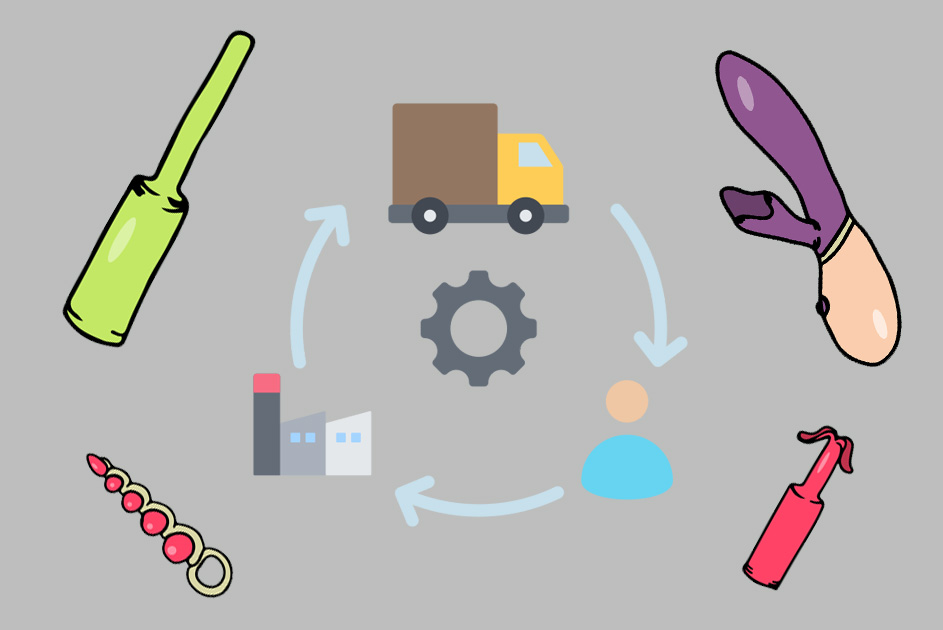
Supply-chain transparency means a company can explain more than where the finished toy is assembled. Materials, electronic components, batteries, packaging and shipping all contribute to the product’s footprint.
Do Not Assume Technology Makes a Supply Chain Transparent
The original version of this article treated blockchain as though it were automatically revolutionizing sex-toy sourcing. That is too broad. Traceability systems can help when companies actually use them and publish meaningful data, but the presence of a technology label does not prove ethical sourcing.
For shoppers, the practical question is simpler: can you find specific information about manufacturing, suppliers or sourcing, and is the company willing to answer reasonable questions?
Materials Matter, but Durability Matters Too
Silicone, stainless steel, glass and ABS can all appear in well-designed sex toys. Their environmental impact depends on sourcing, manufacturing, product lifespan, packaging and what happens at disposal. A durable product that lasts for years may be a better purchase than a disposable novelty even if both use impressive marketing language.
When shopping for luxury products, our luxury sex toy guide can help you compare design and features, but price should never be used as a proxy for ethical manufacturing.
Repairability and Longevity Deserve More Attention
Rechargeable toys eventually face battery wear, cable loss or component failure. Before buying, check the warranty length, whether replacement charging cables are sold, whether the brand offers repairs or replacement parts and whether the product can still function without an app if software support ends.
For app-controlled toys, long-term software support matters too. A perfectly functional device can become less useful if the companion app is abandoned or stops supporting current phones.
A longer-lasting product is not automatically sustainable, but durability and repair options can reduce how often you need to replace the entire device.
Packaging and Shipping
Packaging is one of the easiest environmental claims to evaluate because brands can state whether cardboard is recycled, plastic is reduced or packaging is recyclable in specific regions. Check the details instead of assuming minimalist-looking packaging is environmentally preferable.
Shipping also matters. Consolidating purchases can reduce packaging and deliveries compared with ordering individual products separately, although the actual footprint depends on distance, transport method and fulfillment system.
End-of-Life: What Happens When a Toy Is Finished?
Powered toys contain electronics and batteries that should not automatically go into household trash. Disposal rules vary by location, so check your local electronic-waste system and the manufacturer’s guidance.
Non-powered products may also have limited recycling options because sex toys can combine multiple materials. Our guide on how to dispose of sex toys explains the practical options by product type.
Your Purchase Can Reward Better Information
Consumers cannot personally audit every factory, but we can reward companies that provide clearer information. Before buying, check whether the brand answers basic questions about materials, manufacturing, warranty, packaging and disposal.
If a company makes an environmental or labor claim, look for the evidence behind it. If the information is vague, ask. A transparent company should be able to explain what its claim actually means.
💡 PRO TIP: Build a quick five-point check before buying: exact materials, intended use and safety information, warranty or repair options, specific environmental claims with evidence and a published labor or supplier policy. If a brand cannot answer most of those questions, treat broad 'ethical' marketing cautiously.
Ethical Shopping Still Starts With the Right Toy for Your Body
A toy is not a responsible purchase if it is unsuitable for the way you plan to use it. For insertable toys, check dimensions and intended use. For anal products, use only products designed for anal insertion with secure external retention. For powered toys, follow the exact water-resistance and cleaning instructions.
If you are buying your first vibrator, our first vibrator guide focuses on fit, features and practical use rather than marketing labels.
What an Ethical Claim Cannot Tell You
Even a well-supported sustainability or labor claim does not tell you whether a product will fit your anatomy, whether the motor is strong enough for your preferences or whether the controls are accessible. Treat ethics as one part of the buying decision alongside safety, usability and personal preference.
It also works the other way around. A high-quality product is not automatically evidence of excellent labor practices or a low environmental footprint. Keep the categories separate so one impressive feature does not become a blanket endorsement.
A More Practical Definition of Responsible Pleasure
Responsible shopping means asking for evidence, choosing a product you are likely to use for a long time, caring for it properly and disposing of it correctly when it reaches the end of its life.
You do not need a perfect product or perfect brand. You need enough transparent information to make an informed choice and enough skepticism to question unsupported claims.
FAQs
There is no single definition. Look separately at product safety, material transparency, labor policies, supply-chain reporting, durability, packaging, repairability and disposal. One certification or marketing claim rarely covers all of those areas.
No. Look for the specific environmental benefit behind the claim, such as recycled packaging content, a take-back program or a verified company-level certification. Broad environmental language without supporting detail is less useful.
No. ISO 3533 addresses design, materials and user-information requirements for manufactured sex toys. It does not certify labor practices, carbon impact or supply-chain ethics.
No material is automatically sustainable in every product. Consider sourcing, manufacturing, durability, repairability, packaging and disposal. Exact material identification is still important for care and product safety.
Check the manufacturer’s instructions and your local electronic-waste rules. Rechargeable toys contain electronics and batteries that may require dedicated e-waste handling rather than household trash.
 Previous article