
 Sex Toys For Men
  Sex Toys for Women
  Sex Toys for Couples
  Anal toys
  Fit it
 Sex Ed
 Deals
Deals About Us
 Contact Us
 Aug/04/2023
 2368
2368 8 min read
 Sex in the Future: VR, AI, Sex Robots and Connected Toys

Our articles may contain affiliate links - if you enjoy our content, support us by shopping through them! We earn a small commission at no extra cost to you. Learn more here.
Our articles may contain affiliate links - if you enjoy our content, support us by shopping through them! We earn a small commission at no extra cost to you. Learn more here.
The future of sex is already partly here, but it looks less like a science-fiction android takeover and more like connected toys, long-distance control, interactive video, virtual reality, haptic feedback and AI-assisted software. Some of the most dramatic claims about fully autonomous sex robots remain speculative, while app-connected and content-synced products are already consumer technologies.
Sex Technology in 2026: What Is Real Right Now?
The clearest way to talk about future sex technology is to separate products that exist today from ideas that are still emerging.
Current connected-toy ecosystems can already provide long-distance partner control, real-time toy synchronization, interactive video and VR syncing, motion-responsive devices, voice or sound control and AI-assisted content matching. Those functions are available now, although features vary by brand and model.
For example, Lovense Remote currently supports long-distance control, synchronized toys, sound/music/motion modes and AI-assisted interactive control. Kiiroo FeelConnect connects compatible devices to partners and interactive content in real time.
Foreplay 2.0: Connected Toys Instead of Science Fiction
The most mature part of this category is teledildonics: internet-connected sex toys that respond to remote control, another toy or digital content.
In a long-distance relationship, one partner can adjust another partner’s device from another city or country if both sides are connected to the appropriate app. Some systems can also let two devices react to each other’s movements.
Our teledildonics guide explains the difference between nearby Bluetooth control, internet-based remote control, content synchronization and toy-to-toy interaction.
Virtual Reality Is Moving From Watching to Interacting

VR adult content can surround the viewer with a 180- or 360-degree scene, but the more important technological shift is synchronization. Compatible devices can respond to motion data from a video or VR scene so that physical stimulation changes with on-screen action.
Kiiroo currently markets VR synchronization through FeelConnect, while Lovense offers content-sync features across parts of its ecosystem. That is a real product category today, not merely a future concept.
VR Does Not Automatically Equal Realism
A headset can improve visual immersion, but it cannot reproduce every part of partnered sex. Touch, body temperature, smell, spontaneous movement, emotional context and mutual responsiveness are much harder to simulate.
People may love VR precisely because it is different from partnered intimacy. There is no reason it has to replace anything.
Haptic Feedback Is the Bridge Between Screens and Bodies
Haptics means technology that creates physical sensation. In sex tech, that can include vibration, contraction, suction, stroking, rotation, thrusting or other movement controlled by software.
The next step is not simply “stronger motors.” It is better timing, more precise motion data and coordination between multiple devices. The closer digital input and physical output are synchronized, the more responsive the experience can feel.
AI Is Already Entering Sex-Tech Software
AI in this category is currently much more common in software than in humanlike robots. Consumer systems can analyze content, generate control patterns, power conversational companions or adjust toys automatically.
Lovense, for example, currently offers an AI companion and AI interactive control in its Remote ecosystem, while some connected products use AI-assisted syncing to make toys react to videos.
That is different from a robot that independently understands desire, emotion and consent. Marketing language can blur those categories, so it is useful to ask exactly what the AI feature does.
What About Sex Robots?
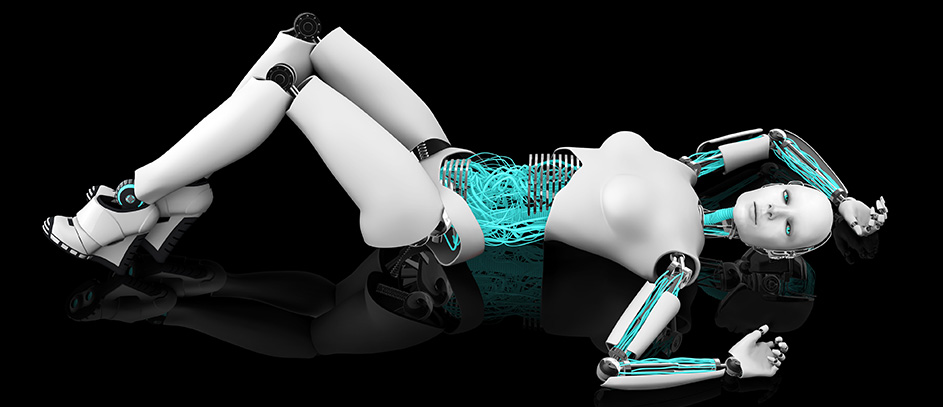
Human-shaped dolls with electronic or conversational features exist, and robotics companies continue to develop more expressive faces, movement and AI conversation. But the fully autonomous, highly mobile sexual partner often shown in fiction is not an ordinary consumer reality.
Mechanical complexity, battery life, safe movement around a human body, cleaning, weight, cost and software reliability are difficult engineering problems. A talking head or AI chat layer should not be confused with full-body robotic capability.
Customization Will Keep Expanding
Software makes personalization easier than manufacturing an entirely new physical product. Users can already save vibration patterns, adjust motion intensity, create control sequences and connect devices to different forms of media.
Future systems may make personalization more adaptive by learning preferred patterns, but that also raises privacy questions. A device that learns intimate preferences must collect data somewhere, and users deserve to know what is stored, transmitted or shared.
Long-Distance Intimacy Is One of the Most Practical Uses
Connected toys can give couples an additional way to interact when they are physically apart. They do not solve every long-distance relationship problem, but they can add a physical component to video calls, messaging or virtual dates.
Consent should still be session-specific. Remote access should be granted intentionally, and the person wearing or using the toy should always be able to stop the device locally.
Privacy Is Part of Sex-Toy Safety Now
Traditional sex-toy safety focuses on material, dimensions, cleaning and mechanical design. Connected toys add another layer: accounts, passwords, Bluetooth, servers, cameras, microphones, chat logs and sometimes intimate media.
Before connecting a device, check the app’s permissions, privacy policy, account security options and deletion controls. Use a unique password and enable stronger authentication when available.
Our connected sex-toy privacy guide covers these risks in more detail.
AI Companions Can Feel Personal Without Being Human
Conversational AI can generate affectionate, romantic or sexual dialogue. That can feel emotionally engaging, but the system does not become a person simply because the conversation feels personalized.
Users should keep track of practical questions: Who operates the service? Is conversation history stored? Can intimate prompts be reviewed? Does the system attempt to sell additional content or services based on emotional engagement?
Those questions matter because intimacy can make users more willing to share information they would normally protect.
Could Technology Reduce Interest in Human Partners?
There is no universal answer. Some people use erotic media and connected toys alongside satisfying relationships. Others may notice that a particular technology becomes compulsive, isolating or less satisfying over time.
The useful test is functional rather than moral. Is the technology interfering with sleep, work, finances, relationships or the ability to enjoy other forms of intimacy? If not, there is no reason to assume that using VR or a connected toy automatically harms partnered sex.
Could Sex Tech Help With Accessibility?
Potentially. Remote controls, hands-free mounts, wearable devices, app-based controls and programmable patterns can make sexual activity easier for some people with limited reach, grip or mobility.
Accessibility is highly individual, though. A device that is easier for one person may be frustrating for another because of button size, weight, app design or charging requirements.
What the Future May Add
More Responsive Biosensing
Future devices may use pressure, movement, muscle activity or other signals to adjust stimulation dynamically. The challenge will be doing that accurately without collecting more intimate health data than necessary.
Better Cross-Brand Standards
Current ecosystems often work best within one brand. Wider interoperability could let users choose devices from different companies without losing interactive features.
Smaller and Quieter Robotics
Advances in motors, actuators and battery technology could make mechanical toys more compact, responsive and quiet. That is a more realistic near-term direction than a household android that perfectly imitates a human partner.
More AI-Generated Interactive Media
AI-generated video, audio and motion data may make interactive experiences more customizable. That development will also intensify questions about consent, likeness rights and synthetic media.
What Technology Cannot Automate
Consent, trust, emotional honesty and relationship decisions still require human judgment. A device can deliver stimulation on command, but it cannot decide whether a partner feels safe or whether a relationship boundary has changed.
If technology becomes part of partnered sex, treat it as a tool rather than an authority. The people using it remain responsible for communication and safety.
💡 PRO TIP: Before using any connected toy with a partner, test the local stop controls, review app permissions and agree on who can control the device and for how long. The person using the toy should always retain an immediate way to stop the session.
How to Try Future-Facing Sex Tech Without Overbuying
Start with the feature you actually want. If the goal is long-distance control, you do not need a VR headset. If the goal is interactive video, check which platforms and device models are supported before buying hardware.
Read current compatibility pages rather than relying on old reviews because app support can change. Connected products are partly hardware and partly software, so features can be added, changed or discontinued after purchase.
Our AI and automated toy guide takes a closer look at how AI claims are being used in current products.
The Future Is More Connected, Not Necessarily More Robotic
The biggest change is already visible: sex toys are becoming software platforms. They can communicate with partners, media and other devices in ways that were rare a decade ago.
Robots and highly immersive virtual partners may become more sophisticated, but the current revolution is simpler and more practical: better connectivity, more precise haptics, interactive content and AI-assisted control.
Software Support Matters as Much as Hardware
A connected toy can remain physically functional for years while its app, operating-system support or online services change. Before buying, check whether the manufacturer still updates the app, whether core controls work locally and what happens if an online service is unavailable.
For privacy and longevity, products that retain useful manual controls are less dependent on a cloud account. That does not make connected features bad; it simply means a sex toy should still be usable if your phone battery dies or the internet disappears.
Consent Problems Can Become Technical Problems
Remote control creates a unique boundary: another person may have technical access to a device that is touching your body. Good systems ask the user to approve control sessions, but you should also know how to revoke access, block a contact and stop the toy locally.
Do not share persistent control links publicly unless you understand exactly who can access them and for how long.
FAQs
Yes. Current products support local phone control, internet-based long-distance control, synchronized toys and media-responsive stimulation. Features depend on the brand and model.
With compatible platforms and devices, yes. Systems such as Kiiroo FeelConnect can synchronize supported toys to interactive VR content in real time.
No. Human-shaped products and AI companions exist, but the highly mobile, fully autonomous robots shown in science fiction are not ordinary mainstream consumer products.
Privacy depends on the device, app and service. Review permissions, account security, data-storage practices and deletion controls before sharing intimate information or granting remote access.
There is no evidence that connected toys or VR inevitably replace relationships. People can use technology alongside partnered intimacy. The important question is whether use supports or interferes with the life and relationships you want.
 Previous article